
What Do Air Conditioner Energy Classes Mean? Savings and Efficiency Guide (2025)
Air conditioner energy ratings are one of the most important indicators of how efficiently an air conditioner works and how much electricity it consumes.
If you’re thinking of buying a new air conditioner, or if you’re wondering how economical your current unit is, you need to know what the energy classes mean.
In this article, we explain air conditioner energy classes from A to Z and tell you how to choose the most efficient unit.
What is Air Conditioner Energy Class?
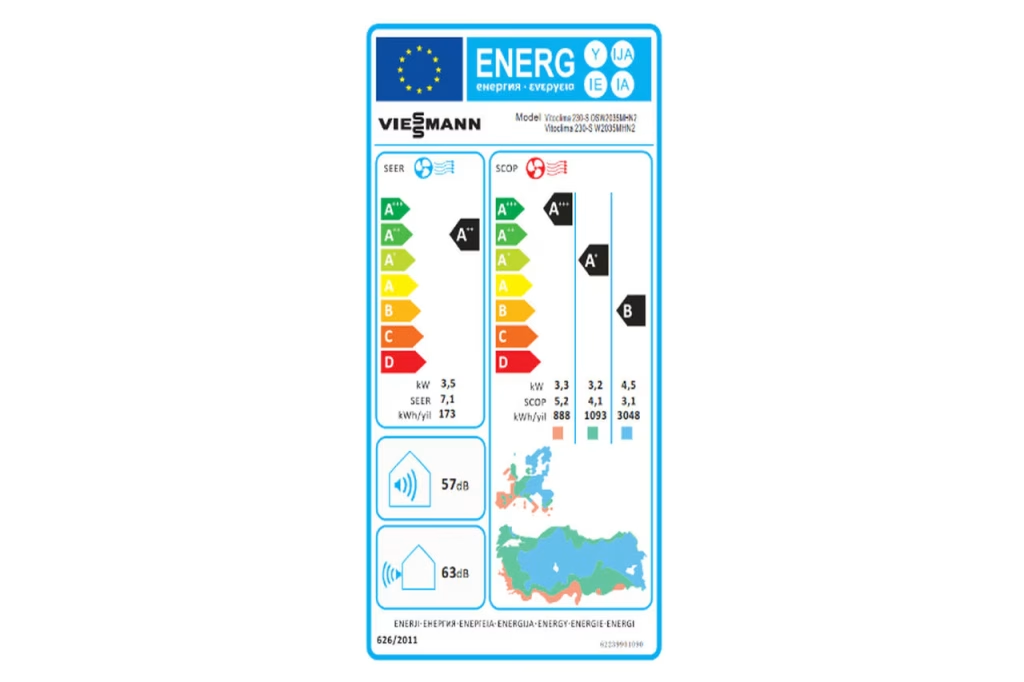
What does the energy label indicate?
All air conditioners produced according to European Union standards must have an energy label. This is on the label:
Energy class (A+++ to D)
Cooling/heating capacity
Annual energy consumption
Sound level
SEER/SCOP efficiency coefficients. As a consumer, the higher the energy class, the more economical and environmentally friendly the appliance is.
What does A+, A++, A+++ mean?
The energy classes are listed as follows (from the most efficient to the least efficient):
✅ A+++: Highest energy efficiency (lowest energy consumption)
✅ A++: High efficiency, consumes slightly more energy than A+++
✅ A+: Medium efficiency
⚠️ A and below: Rarely seen in new generation air conditioners
What are SEER and SCOP?
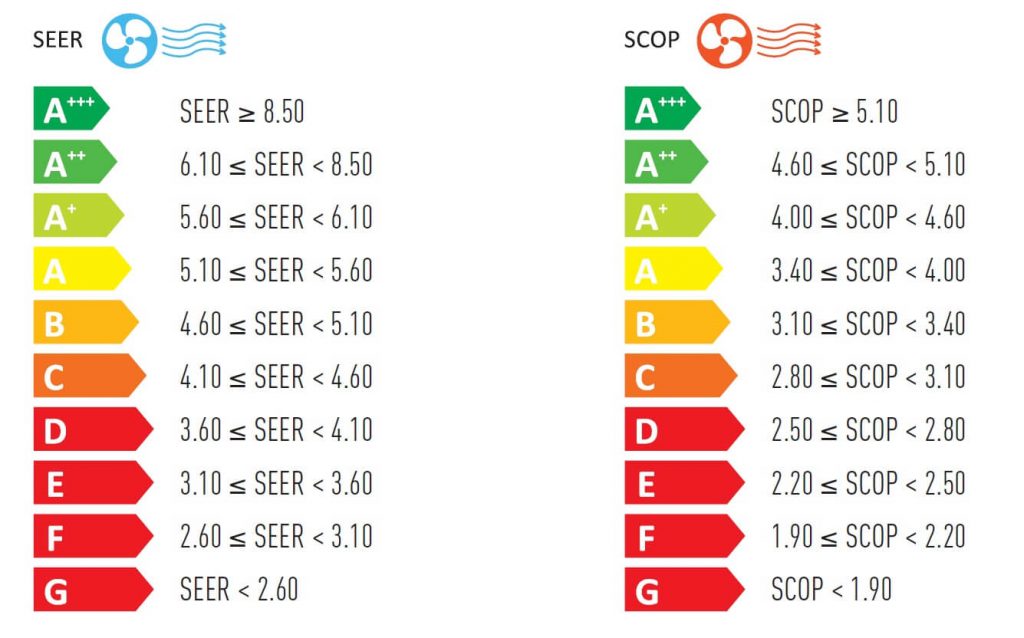
When determining the energy class, not only the letter system but also the efficiency coefficients SEER (for cooling) and SCOP (for heating) are used.
SEER: Cooling Efficiency
The SEER value indicates how much cooling the air conditioner provides with 1 unit of electricity. For example:
SEER ≥ 8.5 → A+++
SEER 6.1-8.5 → A++
SEER 5.6-6.1 → A++
SCOP: Heating Efficiency
It is important for those who will use air conditioners in winter. Just like SEER, the SCOP value shows how economical it heats.
How Much Does Energy Rating Affect Your Bill?
A higher energy rating may mean a more expensive appliance at first. In the long run, however, this difference is offset by savings on the electricity bill.
| Energy Class | Annual Consumption (kWh) | Average Annual Electricity Cost (₺) |
|---|---|---|
| A+++ | 300 | ~600 |
| A++ | 400 | ~800 |
| A+ | 500 | ~1000 |
| B veya altı | 600+ | ~1200+ |
🔍 Note: The calculation was made for an average 12,000 BTU air conditioner.
Which Energy Class Should I Choose?
For Low Use, A+ May Be Sufficient
If the air conditioner is to be used sparingly (e.g. only a few hours in summer), the A+ class can be an affordable alternative.
A+++ is Essential for Continuous Use
For air conditioners that operate more than 8 hours a day, the A++++ class quickly recovers its cost.
Common Energy Labeling Mistakes
Misleading advertising: Some air conditioner brands only write class A and do not give details
Incomplete reading of the label: It is not enough to look only at the letter, SEER-SCOP should also be analyzed
Neglecting the quality of installation: Even efficient air conditioners can cause high consumption with poor installation
Air conditioner energy classes are one of the most decisive factors in terms of efficiency, longevity and environmental friendliness. When buying a new air conditioner, pay attention not only to the price, but also to the energy class. Remember: An air conditioner that consumes less electricity is friendly to both your budget and the environment.

